
Breaking Boundaries in Supply Chain Research: Ramin Sepehrirad’s Journey
By Eric Hollenbeck
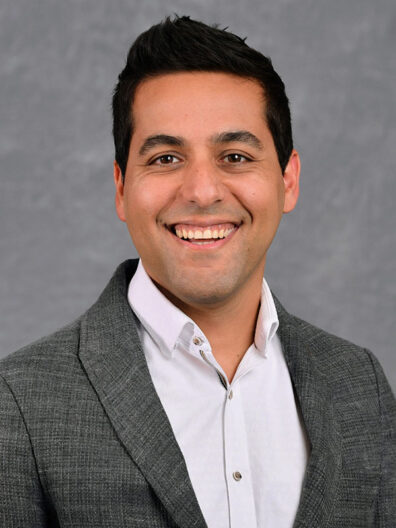
When it comes to understanding and mitigating risks in supply chain management, especially those imposed by final products, Ramin Sepehrirad’s research is making an impact. A PhD student in operations and management science at the Carson College of Business, Sepehrirad is dedicated to uncovering inefficiencies and risks in supply chains that affect industries and communities across the US.
Hailing from Tehran, Iran, Sepehrirad holds degrees in industrial management and management science from the University of Science and Culture and Tarbiat Modares University. Before pursuing his PhD at WSU, he built a career in management consulting and business analysis, working across health care, manufacturing, and nonprofit sectors. His practical experience in these fields ignited his passion for understanding supply chain vulnerabilities, particularly in industries dealing with regulated or high-risk products.
“I needed a more challenging and dynamic career,” Sepehrirad says. “The PhD offered me the flexibility to explore diverse research questions and collaborate with scholars who are passionate about making meaningful change.”
His decision to attend WSU was driven by a desire to study at an R1 research institution while enjoying the quieter pace of a college town, a stark contrast to the traffic-choked streets of Tehran.
“Pullman exceeded my expectations in terms of quality of life and academic opportunities,” Sepehrirad says. “Especially with unwavering support I have been receiving from the college.”
Understanding the opioid crisis through supply chain analysis
One of Sepehrirad’s most impactful contributions at WSU is his research on the diversion risk of pharmaceutical products—instances where legally distributed opioids end up in unintended markets. His study, published in October 2024 in the Journal of Operations Management, a UT Dallas Top 24 business journal, investigates how supply chain structures contribute to opioid diversion, a major factor in the ongoing opioid crisis.
The paper, “Supply Base Attributes and Diversion Risk in a Supply Chain for Hazardous Pharmaceutical Products,” highlights systemic vulnerabilities in pharmaceutical supply chains that allow opioids to be redirected into illegal markets.
Sepehrirad credits WSU professor emeritus Paul Skilton for bringing him onto the opioid supply chain research project.
“Dr. Skilton invited me to coauthor the study, which gave me invaluable experience navigating the intricacies of publishing in an A-level journal,” he says.
This opportunity not only enhanced Sepehrirad’s research skills but also deepened his understanding of the systemic nature of the opioid epidemic.
“The opioid epidemic is a systemic issue,” says Sepehrirad. “Focusing solely on one actor—whether manufacturers, distributors, or pharmacies—misses the bigger picture. It’s the interactions within the entire supply network that create unintended outcomes.”
His work on the opioid supply chain study earned first place at WSU’s 2023 Graduate Professional Student Association (GPSA) Research Exposition in the business, communication, and political science category. The accolade highlights the impact of his research and his commitment to addressing real-world problems through rigorous academic inquiry.
Expanding research on automotive product recalls
As part of his doctoral dissertation, Sepehrirad is collaborating with WSU assistant professor Kevin Mayo to study the dynamics of automotive product recalls. Their research examines how interventions by the National Highway Traffic Safety Administration (NHTSA) affect the effectiveness of recalls.
One surprising finding suggests that recalls mandated by NHTSA overall result in lower completion rates, leaving more defective vehicles on the road, an unintended consequence of regulatory action.
“We’re exploring why mandatory recalls, which are meant to enhance safety, sometimes have the opposite effect,” Sepehrirad says. “It’s a complex interaction between manufacturers, regulators, and consumers that isn’t always straightforward.”
Life beyond WSU
With just over a year left in his doctoral program, Sepehrirad is focused on completing his dissertation and preparing for the academic job market. He envisions a future in academia where he can continue researching supply chain dynamics while mentoring the next generation of business leaders.
“I’m excited about the future,” he says. “I want to keep pushing the boundaries of supply chain research while mentoring the next generation of scholars.”