
Collaborative Research Explores Workplace Bullying Across Cultures
By Eric Hollenbeck
Understanding workplace bullying through research
Using a mixed-method approach, Alieva and her coauthors conducted two surveys involving 92 individuals from education, production, logistics, and sales sectors in Tashkent, Uzbekistan. The first part of the study focused on workplace bullying, revealing various forms of mistreatment, including verbal abuse, social exclusion, and undermining of work, with cultural norms significantly shaping how these behaviors were perceived.
“One of the most fascinating aspects of this research is how different cultures define and respond to workplace bullying,” says Mark Beattie, scholarly assistant professor of hospitality business management at WSU Everett and a coauthor of the study. “In some workplaces, employees may feel pressure to stay silent, while in others, there are clear systems to report and address concerns.”
The research also examined workplace violence, uncovering instances of physical altercations and psychological harassment. Cultural norms and authority structures in Uzbekistan were found to heavily influence workplace dynamics.
“This impacts not only how bullying and violence are perceived, but also how they are managed,” Beattie says.
The findings underscore the importance of culturally sensitive strategies for addressing workplace bullying and violence, offering valuable insights for business leaders and HR professionals aiming to build healthier, more inclusive workplaces.
Beattie and Alieva presented “Cultural Influences on Workplace Bullying and Violence: The Case of Uzbekistan,” at the Research Association for Interdisciplinary Studies (RAIS) conference in November 2024. Coauthors included Odinabonu Khojiakbarova and Diyorakhon Yuldasheva from the Management Development Institute of Singapore in Tashkent.
Building bridges through academic exchange
The Faculty Enrichment Program (FEP), funded by the US Embassy in Tashkent and administered by the American Councils for International Education, made this research collaboration possible. The FEP supports international faculty exchanges, allowing visiting scholars to observe US courses, attend academic conferences, and collaborate on research.
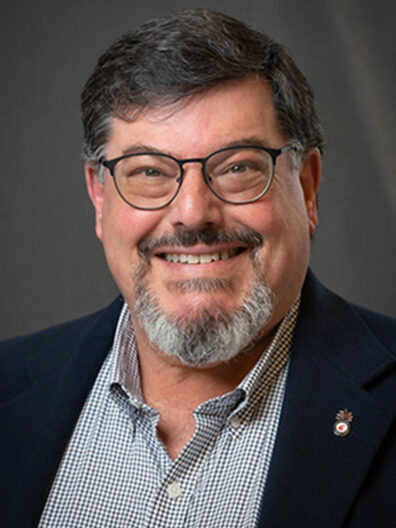
Through the FEP, Alieva joined WSU Everett from August to December 2024, connecting with Beattie to explore shared academic interests.
“The Faculty Enrichment Program is invaluable for both visiting faculty and WSU,” Beattie says. “It strengthens research partnerships, introduces fresh perspectives, and reinforces our commitment to global business education.”
Beyond research, Alieva’s time at WSU Everett involved classroom engagement and community outreach. She participated in Beattie’s International Business 380 course, providing students with unique insights into cultural dynamics in global business.
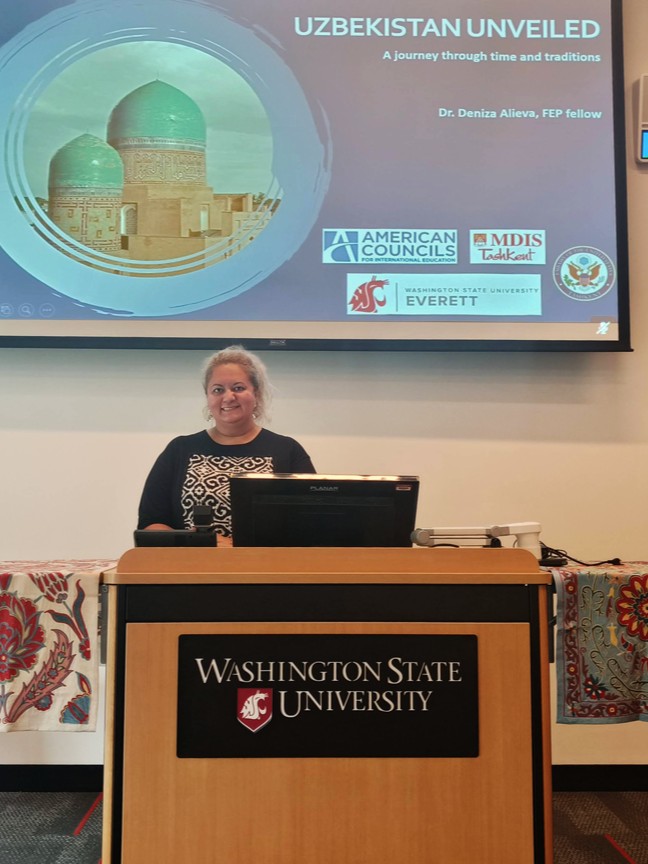
A key component of the FEP is community engagement. Alieva delivered a public cultural lecture at WSU Everett, attended by students, faculty, staff, and community members, including participants from the Seattle-Tashkent Sister City Association.
“The exchange wasn’t limited to academics,” Beattie says. “We explored the region together, from Mount Rainier to local events, strengthening the bonds formed during her visit.”
Looking ahead
This partnership exemplifies the power of academic exchange programs like the FEP in fostering meaningful research collaborations and cultural understanding. Beattie says future plans include comparative studies on workplace bullying between the US and Uzbekistan, further exploring how cultural contexts shape workplace behaviors.
Beattie was awarded a Fulbright Specialist grant to visit Uzbekistan and continue this collaborative research.
“This exchange has sparked a genuine curiosity and a desire to understand more about workplace cultures in Central Asia,” he says.
Collaborative efforts like this highlight the Carson College of Business’s commitment to impactful scholarship and global leadership, demonstrating how faculty and students benefit from rich cross-cultural experiences that prepare them for professional success in an interconnected world.
Alieva says her experience was more than just a professional engagement—it was a journey that brought together academic insights, cultural experiences, and personal growth.
“Whether it was students in the classroom, colleagues at conferences, or new friends during cultural outings,” she says. “Each person brought unique perspectives that enriched my understanding and broadened my worldview.”