

New TechReady Collaborative Moves Carson Forward
By Scott Jackson
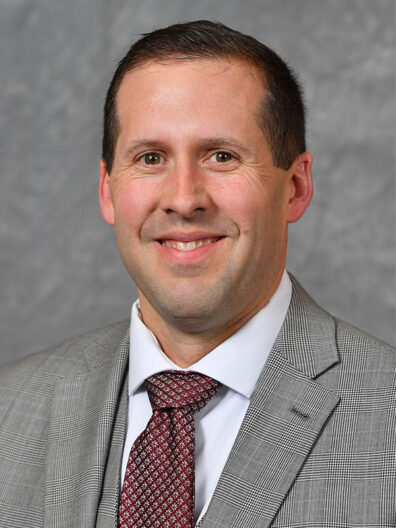
“Parents want to hear that we are paying attention to what their students need to be successful when they graduate,” says Robert Crossler, chair of the Department of Management, Information Systems, and Entrepreneurship, and inaugural director of the collaborative. “We’ve been doing that, but we needed to do a better job of communicating how we’re preparing students to meet new challenges, especially related to new technology.”
Bringing a unified vision to emerging technology
Crossler had observed a recurring issue—Carson faculty, staff, and students were engaging with artificial intelligence (AI) and other emerging technologies, but their efforts were often siloed. Without a coordinated way to share new processes and projects internally, the college risked duplicating efforts and missing opportunities to collaborate.
To address these issues, the college launched the CCB TechReady Collaborative to provide a central hub that brings together student-facing innovation, faculty development, research, and external engagement.
Its name is deliberately broad. While artificial intelligence may be a driving force now, Crossler says the goal is to prepare the college for whatever comes next.
“Technology doesn’t stop advancing,” he says. “We need to be intentional about looking forward.”
A hub for learning, research, and collaboration
The TechReady Collaborative employs students to help faculty test tools, troubleshoot workflows, and document processes so best practices can be shared more widely. Faculty interested in experimenting with AI tools—whether for research, instruction, or administrative work—can access support tools created by peers and the student assistants. When it comes to instruction, Crossler says Carson students will benefit from instructors who are purposeful and informed and from classwork that’s more relevant to emerging technology.
Meanwhile, those same students gain valuable exposure to industry-relevant tools and knowledge.
In November, the collaborative launched AI@Carson, a hands-on workshop where students learned how to craft effective prompts, critically assess AI-generated content, and explore ways generative AI can address real business challenges.
“When these students are seeking internships or jobs, they’re going to be able to speak directly to employers about how they foresee utilizing these technologies in the workplace,” Crossler says.
Preparing for What Comes Next
While it is a key focus, Crossler says the collaborative’s mission extends beyond AI. Technologies like robotics and quantum computing are already on the horizon, and the collaborative aims to build the relationships and internal culture that will help the college stay ahead of the curve.
Crossler envisions a flexible platform that evolves with both campus needs and global developments. Fireside chats, external speaker series, asynchronous learning opportunities, and industry input are all on the table.
The initiative is grounded in a mindset of lifelong learning—teaching students not just how to use tools, but how to leverage, adapt, and build new systems as they emerge.
“Students really develop the skill of learning—like how to use new technologies and other things,” Crossler says. “I could teach you a programming language today and before we know it, the industry is using a different programming language tomorrow.”
In the long run, the collaborative may become a way for the Carson College to speak more clearly to prospective students, employers, and donors about advances it’s making in the tech space.
“If parents see how we’re thinking, they’re going to say, ‘I want my kid to go there,’” Crossler says. “If our alumni are seeing this, they’re going to talk about how WSU actually is leading the way.”