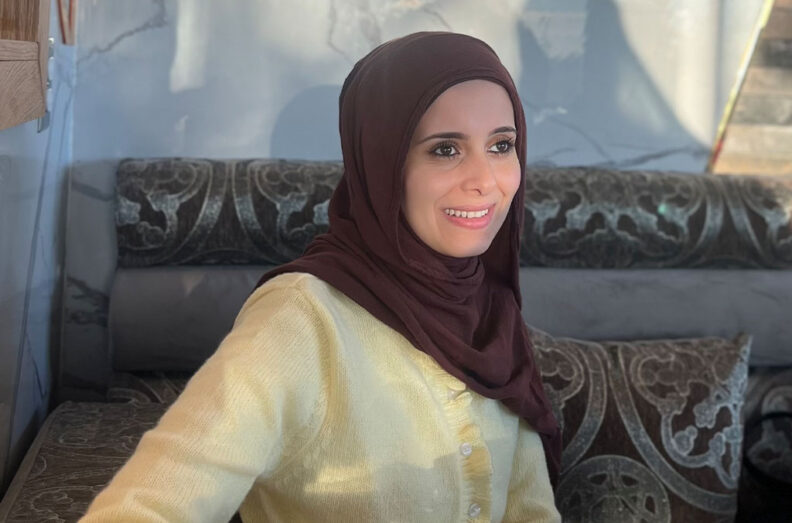

How an MBA Helped Sally AboHana Lead AI Transformation
By Lauren Lesmeister
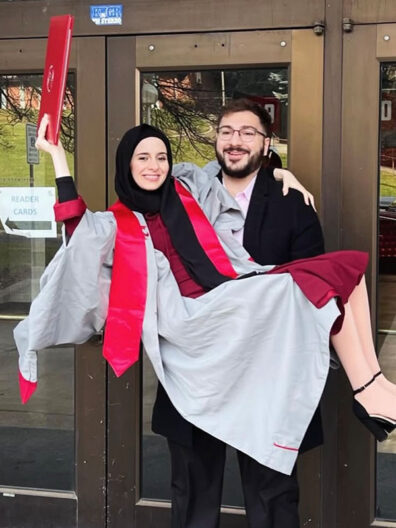
Already a successful AI professional, AboHana wanted to expand her leadership skills through an MBA program. During her search, the Carson College of Business Online MBA, offered through WSU Global Campus, stood out for its flexibility, strong alumni network, and emphasis on leadership and innovation.
“I wanted a program that wasn’t just about theory but about preparing leaders to tackle real-world challenges—and Carson delivered on that,” she says.
Building an AI career
AboHana has built an impressive résumé working for some of the most well-known and innovative companies in the tech industry. At Amazon, she worked on Alexa, one of the most recognizable and utilized AI products in the world. Her role was to make Alexa better at understanding everyday speech so it could respond more accurately and naturally.
Later, AboHana joined Google, where she led conversational AI projects, designing virtual agents to improve customer service quality and efficiency.
In her current role as AI solutions architect – manager at PricewaterhouseCoopers (PwC), she leads programs that modernize customer service contact centers. Her team uses advanced AI and analytics to identify opportunities to improve customer self-service support and leverage insights to enhance efficiency and reduce friction in the customer experience.
While her work revolves around advanced technology, AboHana says it’s always about people in the end.
“What excites me most about this field is how fast it’s evolving,” she says. “The chance to turn cutting-edge ideas into real solutions that change how people interact with technology and make everyday experiences simpler, faster, and more human is incredibly rewarding.”
Seeing the bigger picture
The knowledge she gained earning a Carson College MBA helped AboHana step back from the technical side of AI to understand it within a broader business context. By expanding her knowledge across different functional areas, she can now connect innovation to return on investment, customer satisfaction, and organizational change.
For example, while managing an AI contact center initiative for PwC, AboHana applied data analysis and strategic decision-making skills she developed while earning her MBA to translate technical improvements to the customer self-service experience into measurable outcomes.
“By analyzing data, I was able to demonstrate how AI-driven self-service could reduce call volumes, improve efficiency, and enhance customer satisfaction,” she says. “The MBA equipped me with the ability to connect data insights to business value, which has been critical in making the case for large-scale AI initiatives.”
AboHana says she also found courses that touched on leadership and organizational behavior to be surprisingly relevant to her work. These tools help her lead teams, manage change, and communicate with stakeholders.
“In AI, the hardest issues aren’t always technical—they’re about people, culture, and change,” she says. “The skills gained in those courses have been invaluable in driving adoption of more AI-driven solutions.”
Advice for future leaders
AboHana encourages aspiring AI professionals to cultivate their curiosity, adaptability, and most importantly, their confidence. She believes growth happens when you take on projects that step beyond your comfort zone.
“That’s where innovation happens,” she says.
AboHana credits her MBA experience with helping her develop confidence and leadership abilities that allow her to champion new ideas and make a lasting impact in her field.
“Earning my MBA represents a turning point in my career,” she says. “Personally, it gave me confidence in my ability to lead at a higher level. Professionally, it gave me the tools to connect my technical expertise in AI with strategy and operations—skills that are critical in driving transformation at scale.”