
By Sue McMurray

Just over a year ago, Carson College of Business Assistant Professor Pavan Munaganti launched International Sales, a new course that prepares students for global sales roles in a rapidly changing market.
“Future sales professionals need to understand the importance of cultural awareness in sales negotiations,” Munaganti says. “They will discover that negotiation, time management, and contract signing processes may vary greatly from country to country.”
A central component of the class involves students analyzing case studies that present sales challenges unique to different countries. Bringing seasoned international sales professionals into the classroom is another strategy Munaganti uses to build students’ knowledge of cultural nuance in business situations.
This spring, he invited Jess Downs, program manager of downstream marketing for PROCEPT BioRobotics, to share his expertise in developing global business acumen, leadership, and stakeholder management in the surgical device industry.
Finding common ground through cultural awareness
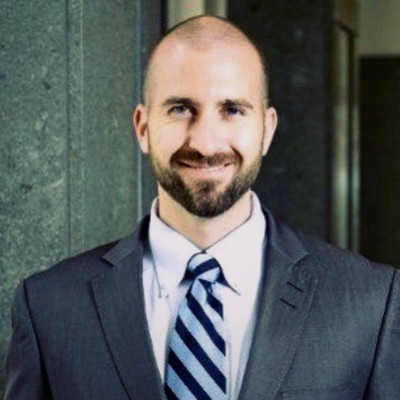
Downs has worked in surgical robotics for more than a decade in multiple roles, developing critical global training programs in more than 25 countries, focusing mainly on the Asia Pacific region. As a former Marine who served in Afghanistan, he says understanding cultures, following processes, and working independently were key skills that enhanced his civilian career. He also hired local team members who could act as cultural liaisons, and he developed and practiced a business-to-business talk track.
“My team members helped me understand the differences among cultures,” he says. “For example, carrying things in a messenger bag doesn’t align with the formal business style of Japanese hospital executives. You also have to pay attention to what you wear. In Japan, a coat and tie are expected attire for business meetings, but in Australia, a regular shirt is ok.”
Downs explained that the concept of time varies from country to country. In Japan, meeting times are exact. In India, they are fluid—Downs says he would often plan ahead to do other tasks there while waiting for contract signatures. In China, he could not demand a contract signature deadline because it could imply that he lacked trust in his Chinese colleagues. He says he also learned to navigate a “business drinking culture,” where it’s the norm to drink and socialize before making important business decisions.
“Don’t make guarantees to sign contracts anywhere but in the office,” Downs says. “And if you say you don’t drink, don’t break character, because that breaks down personal trust, which is key in China—even more important than a contract.”
Downs says emotional intelligence training can be a helpful tool for international sales professionals to learn how to manage emotions in a way that’s acceptable in another culture. Before traveling, Downs gathered information about the economy and political climate of each place and how they would affect his purpose. He used flight time to consider his own expectations and make any necessary adjustments in his personal communication style, logic, or behavior that would best solve his customers’ problems.
“Try to find common ground with the people you’re working with,” Downs says. “I talked about my kids or sports, but I usually refrained from talking about my military service when traveling internationally.”
Building credibility through client-specific communication skills
In the robotic-assisted surgery space, Downs says he built a strong understanding of how doctors in specific disciplines respond to sales communication. He characterizes cardiac surgeons as “top dog” professionals who don’t tolerate schmooze, as their expertise often involves managing critical emergency care and life-altering conditions. Gynecologists, on the other hand, often build longitudinal relationships with their patients across different stages of life.
“You’ll lose credibility fast with cardiac surgeons if you stray from a clinical approach,” Downs says. He also took note of the economic disparity between the two sectors and how it would affect his pitch. “A $600,000 contract for surgical technology wasn’t a big ask in a cardiology department, but it was in a gynecology department,” he says. “I thought a lot about clinical equivalence when shaping my approach.”
Preventing burnout hinges on healthy work/life balance
To avoid burnout from traveling, Downs balanced his time among three meaningful pillars: work, family, and community. He says it’s important to choose an organization that aligns with your personal values and sense of purpose and to make a conscientious effort to block out time for family and community.
He also urged students to think about the long-term impact of their careers.
“The most rewarding thing about my role is building a sustainable process that enhances a company beyond my time,” he says. “Think about the legacy you want to have.”