By Eric Hollenbeck
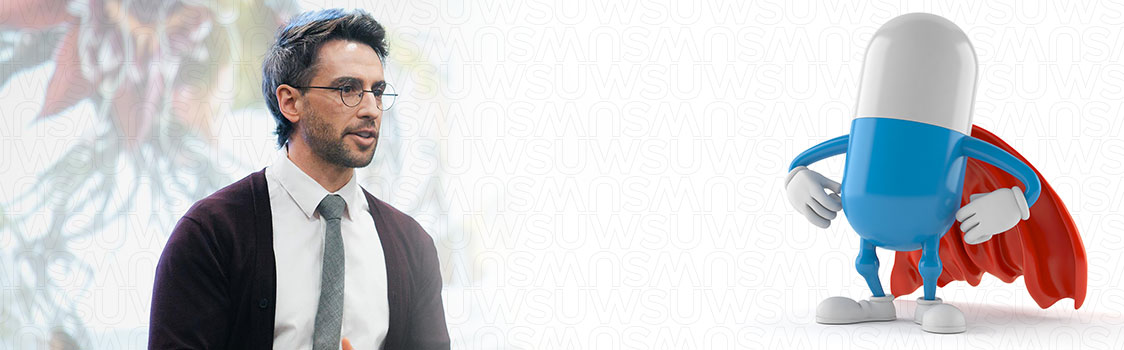
When most people take a pill for pain, they think about relief—not the marketing behind the medicine. But for Josh Groves, a PhD student studying marketing at the Carson College of Business, the way pain is packaged, branded, and understood is at the center of his research.
Groves earned his bachelor’s degree in marketing from Utah Valley University (UVU) in 2014, graduating summa cum laude and valedictorian of the marketing department. After completing his undergraduate degree, he stayed at UVU to earn his MBA. It was during that time that his teaching and research career began to take shape.
Recognized by faculty for his research curiosity and promise, Groves was invited to continue teaching after completing his graduate degree. He codeveloped UVU’s SMARTLab, an innovative neuromarketing lab that focuses on a data-driven approach to understanding consumer behavior. The work combined biometric analysis with psychological insights and sparked in him a growing passion for research and mentorship.
It wasn’t long before Groves realized pursuing a PhD at WSU would allow him to deepen both his research and his impact in the classroom.
Archetype narratives may improve public health messaging
Groves brings the same blend of academic rigor and curiosity to his WSU research and teaching that he applied to his work at UVU. His PhD dissertation, “From Caped Capsules to Sinister Syrups: The Adventures of Anthropomorphism in Pharma Branding,” explores how pharmaceutical companies can use emotional storytelling to influence how consumers connect with products.
One strategy, known as anthropomorphism, involves giving human-like traits to nonhuman entities—such as portraying a specific medicine or pill as a hero or champion that defeats the villain, in this case an illness or disease. While many companies rely on fear-based tactics that frame illness as the enemy and often evoke emotional or psychological distress, “hero” narratives offer an alternative. This type of marketing messaging can build emotional trust and make a product feel more relatable or even protective, without the negative side effects associated with fear appeals.
“Pharmaceutical companies can utilize hero narratives to enhance trust and emotional connections with consumers, driving purchase intent and adherence to medication,” he says.
Preventative medicines, for example, might benefit from branding that positions them as guardian-like figures, while curative treatments could emphasize strength and resilience. These archetypes, he explains, can help and promote better outcomes for patients.
This work is also personal. Groves began his PhD during the COVID-19 pandemic, a time that led him to think more critically about how pain is perceived, addressed, and communicated in both health care and marketing.
He is actively involved in research and several ongoing projects in addition to his dissertation. These include collaborations with Carson College faculty Jeff Joireman, Kunter Gunasti, and Betsy Howlett, as well as faculty mentors and peers from UVU. These partnerships reflect Groves’s belief that collaboration is key to solving real-world problems through marketing science and research.
Research and teaching contributions earn recognition
In March 2025, Groves won both first place and the People’s Choice Award in the Carson College of Business’s Three Minute Thesis (3MT®) competition. His presentation, based on his dissertation research, condensed complex concepts into an accessible and engaging talk that impressed judges and audience members alike. He advanced to represent the college at the university-wide 3MT® competition, gaining even broader exposure for his work.
His classroom contributions are just as noteworthy. In 2024, he received the Darrel Muehling Excellence in Teaching Award, which recognizes outstanding instructional performance.
“It’s really cool to watch as students realize what can actually be done in the field of marketing,” Groves says. For him, effective teaching starts with curiosity and continues with real-world relevance and personal connection.
Groves’ commitment to personal and professional development extends far beyond the classroom. He is fluent in Spanish, has taught English in Spain, and volunteered with organizations like Habitat for Humanity. He is also an active member of professional associations including the American Marketing Association, the Marketing Educators Association, and the Association for Consumer Research.
As Groves looks ahead to graduation in May 2026, he is exploring faculty opportunities at universities across the US. He says he is excited by the opportunity to continue mentoring students and conduct research that shapes how marketing can be used as a force for good.
“As an educator and researcher, you have the power to influence not just individual careers but entire industries,” he says. “That’s what makes this work so rewarding—it’s about creating impact at every level.”