By Sue McMurray
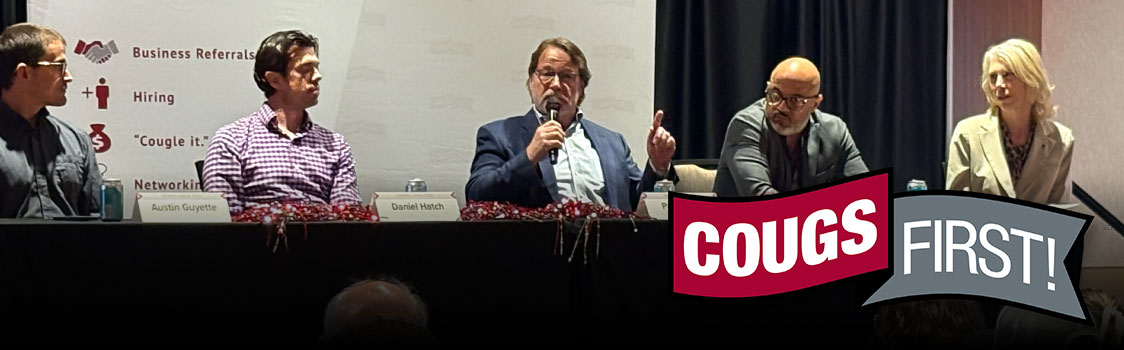
From venture capital to banking, choosing a source of funding that’s the right fit—and when to seek it—are important decisions for entrepreneurs. Strong relationships and timing are as important as the money itself, according to a panel of lending experts who discussed entrepreneurial funding during the 2025 CougsFirst! Show & Career Expo in Bellevue.
CougsFirst! is a business network inspiring WSU alums and friends to prioritize Coug businesses for products, services, and hiring.
The panel, part of the college’s Power Lunch program for Seattle-area business professionals, represented venture capital, angel investing, commercial banking, and private debt financing. Panelists included Austin Guyette, partner, Voyager Capital; Daniel Hatch, director of commercial banking, BECU; Pat Murphy (’83), founder and CEO, Leadscorz Inc.; and Jody Page (’96), managing partner, PACAM.
“Our partnership with CougsFirst! helps us stay connected with alumni and meet the evolving needs of the Pacific Northwest business community,” says Carson College Dean Debbie Compeau. “Events like this panel and our fall c-suite roundtable promote relevant thought leadership.”
Types of funding and when to seek it
A common theme was the importance of matching funding strategies to business outcomes and building strong relationships with funders.
“Not all money is good money,” Page says. “Your financing must align with your business strategy. Entrepreneurs need to work with someone who understands nuances of debt capital strategy.”
Hatch emphasized debt funding isn’t always appropriate for startups—regulations can limit banks’ flexibility. He advised new entrepreneurs to build solid personal credit, open business accounts, and form strong relationships with lenders. “A strong FICO score demonstrates what you can tackle when starting a business,” he noted.
Guyette discussed venture capital as a fit for companies—especially in tech—that need significant, upfront investment. “Venture capital is expensive and only works with big outcomes,” he says. “Entrepreneurs should explore the cheapest options that will match their business outcomes.”
Navigating misconceptions and the investment process
Murphy addressed misconceptions about angel investing, noting that it’s not always about high returns. He says experienced angel investors back founders they believe in, and they’re often personally aligned with the product and the founder’s values.
When it comes to the funding process, timelines can vary widely. Angel investments can take months as investors conduct due diligence and assess alignment with the entrepreneur’s goals. Private lending can also take several months, Page says.
Venture capital timelines differ greatly. “I’ve seen deals close under an hour and others take years,” Guyette says. “The best relationships develop over months or years. Plan for at least one or two quarters for raising venture capital.”