

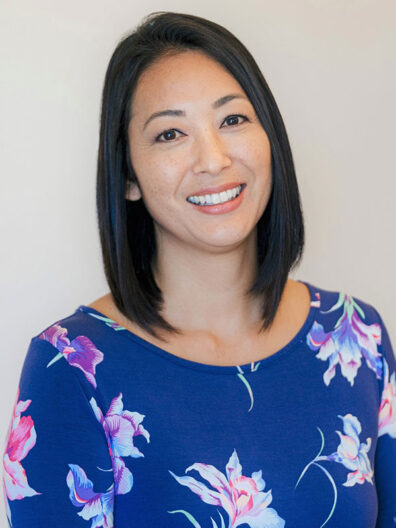
When Kathy Fujiwara (’22 EMBA) enrolled in WSU’s Carson College of Business Executive MBA program (EMBA), she was already an accomplished human resources executive. But she wasn’t looking for another credential, she was looking for a broader leadership perspective.
Fujiwara is the CEO of EXEC Hawai’i, where she helps organizations strengthen leadership, workforce strategy, and effectiveness. She also founded Pacific Artisan Collective, a nonprofit that supports Hawai’i-based artisans and makers. She credits the EMBA program offered through WSU Global Campus with helping her tie business strategy to her commitment to entrepreneurship, nonprofit leadership, and community impact.
Fujiwara says WSU’s online program stood out because it is designed for experienced professionals balancing graduate education with demanding careers.
“The structure was one of the greatest gifts of the program,” Fujiwara says. “Rather than feeling pulled in two directions, I felt strengthened in both spaces. I could bring real business challenges into discussions and leave with clearer thinking and new tools. It made the experience deeply relevant and sustainable.”
Expanding a leadership perspective
Before pursuing her EMBA, Fujiwara had built her career in senior human resources leadership. She wanted to deepen her understanding of finance, enterprise strategy, and the broader business decisions that shape organizations.
While balancing graduate school with the demands of leading during the COVID-19 pandemic presented challenges, she says the experience ultimately changed how she approached leadership.
“An Executive MBA stretches how you think. It invites you into rooms where your perspective is expanded and sometimes challenged,” she says. “If you are open to that, it will change how you see business, leadership, and people.”
The program’s emphasis on practical application helped Fujiwara connect classroom concepts with real organizational challenges. She says the finance and strategy foundation she developed through the program has been essential to building EXEC Hawai’i and expanding its work with organizations across the state.
Building stronger organizations
Today, through EXEC Hawai’i, Fujiwara helps organizations strengthen leadership, develop workforce strategies, and build resilient teams through executive coaching, HR, and accounting services. Much of that work involves advising family-owned businesses and nonprofits as they navigate challenges related to succession and long-term continuity—issues that are often closely intertwined for these kinds of organizations.
The EMBA also helped reinforce an idea that continues to guide her work: “Purpose is powerful, but sustainability requires strategy,” she says.
That perspective shapes not only the services EXEC Hawai’i provides, but also the way Fujiwara approaches leadership—helping organizations think beyond immediate challenges toward long-term sustainability.
Business as a force for community
That philosophy also inspired Fujiwara to launch Pacific Artisan Collective, a nonprofit that supports Hawai’i-based artists. Through the organization, she hopes to preserve local culture while creating economic opportunity for small businesses and strengthening communities throughout the islands.
For Fujiwara, the nonprofit reflects the same principles she developed during her EMBA studies—that sound business practices can be used to advance organizational success while supporting cultural preservation and community resilience. She says building PAC required translating its mission into a sustainable structure, developing the leadership and support systems needed to create meaningful opportunities for Hawaiʻi’s creative community.
Looking back, Fujiwara encourages professionals considering an EMBA to pursue it not simply for career advancement, but for personal growth. Those lessons continue to guide her work, where business strategy and community impact go hand-in-hand.
“My professional foundation has always been rooted in people, leadership, and organizational culture, but the EMBA expanded my lens,” she says. “It helped me move from thinking primarily as a functional leader to thinking as an enterprise leader—someone who can connect people, numbers, mission, and long-term viability.”