
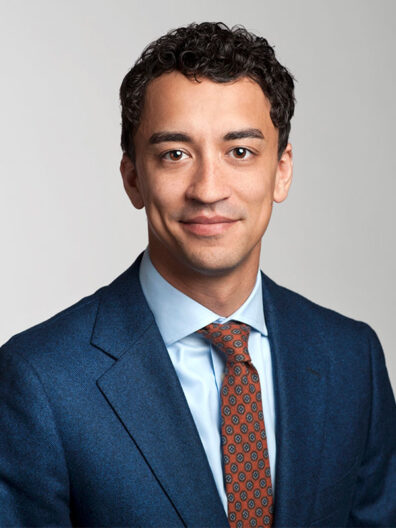
As gambling markets expand and evolve around the world, Carson College researchers are working alongside regulators, industry groups, and policymakers to better understand how to balance innovation with public well-being. Kahlil Simeon-Rose, associate professor of hospitality at WSU Everett, has become part of that conversation through advisory roles and collaborations that span North America, Europe, and the Middle East.
From speaking at the G7 Canadian Brain Economy Summit’s forum on responsible gaming and gambling policy to serving on industry and scientific advisory boards, Simeon-Rose’s work reflects the relationship between business strategy and ethical policy-making.
Bridging research and responsible gambling policy
Simeon-Rose’s research examines how responsible gambling policies are designed and implemented.
While he says many of the people working in this field approach it from a public health perspective, Simeon-Rose is able to offer a view from the operational side of the industry rooted in his background in economics, consumer behavior, and public policy.
“A lot of people in my field are psychologists, public health experts, or social workers,” Simeon-Rose says. “My expertise tends to be in understanding the industrial side of the issue and how you create responsible gambling policies from a regulation standpoint.”
This expertise has led to advisory roles with several organizations across the globe, including the Canadian Gaming Association’s Responsible Gambling Working Group, the German Foundation on Gambling Research, the Responsible Online Gambling Association in the United States, and consulting work with newer regulators in places like Abu Dhabi. Across these roles, Simeon-Rose provides insight into how research findings translate into real-world practices, from employee training to regulatory strategy.
Understanding a rapidly changing industry
According to Simeon-Rose, modern gambling has developed in waves, shaped by shifting technology, regulation, and public demand. The rise of online platforms and digital payment systems has accelerated that change, transforming what was once a tightly regulated industry into a rapidly expanding global market.
“Thanks to the internet, what was once a very controllable product can no longer be controlled in the same way,” Simeon-Rose says.
This expansion has introduced new challenges for regulators and industry leaders alike. On one hand, public health professionals often push for limiting product features to reduce harm. On the other, the emergence of offshore and unregulated operators creates competitive pressure that complicates those efforts. Policymakers and companies are now grappling with how to maintain safeguards while ensuring regulated markets continue to attract customers.
“You basically need to make sure that you have product parity between the regulated market and unregulated market,” Simeon-Rose says. “In this world, you want to be able to create better brand awareness for the regulated and licensed operators, because that’s one of the few ways that they can actually out-compete the offshore market.”
As gambling continues to evolve alongside new technologies, Simeon-Rose notes that understanding consumer behavior—and the incentives driving both regulated and unregulated markets—has become essential to crafting effective policy.
Global impact through research
As a business scholar, Simeon-Rose says he has a moral obligation to work on the kinds of industry problems that harm public well-being, in addition to more conventional business concerns like generating profit and minimizing expense. He contributes to international conversations that help ameliorate these harms. These partnerships also create opportunities that connect the Carson College to emerging policy discussions around the world, he says.
“These types of collaborations build the international profile of our program and college and demonstrate our research insights are relevant beyond Washington state,” Simeon-Rose says. “They’re useful in countries all around the world. A lot of what we’re learning through this work is generalizable in different markets.”